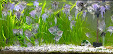
Peacock bass Feeding Carassius auratus fish|JR aquarium #Shorts
Peacock bass (or Brazilian tucunaré) (Cichla) is a genus of large cichlids, diurnal and predatory freshwater fish native to the Amazon and Orinoco basins, as well as rivers of the Guianas, in tropical South America. They are sometimes referred to in English by their Brazilian name tucunaré or their Spanish name pavon. Despite the common name and their superficial similarity, they are not closely related to other fish known as bass, such as the North American largemouth bass (Micropterus salmoides).
Peacock bass are important food fish and also considered game fish. This has resulted in their accidental (escapees from fish farms) or deliberate (release by fishers) introduction to regions outside their native range, both elsewhere in South America, and in warm parts of North America and Asia. Singles have been caught elsewhere, including Australia, but do not appear to have become established there. Where established as an introduced species, they may become invasive and damage the ecosystem because of their highly predatory behavior, feeding extensively on smaller native fish.
The largest species in the genus, the speckled peacock bass (C. temensis), reaches up to 13 kg (29 lb) in weight and 1 m (3.3 ft) in length, possibly making it the largest species of cichlid (others suggest that prize goes to the African giant cichlid, Boulengerochromis microlepis). Other peacock bass species are smaller. They are sometimes kept in aquariums, but even the smaller species require a very large tank.
皇冠三間原產于亞馬遜河流域、巴西東部,在當地做為食用魚和垂釣魚類。體形相當大,應使用大型水族箱,屬于猛魚,喜成對,適應力強,不挑水質,但最好是弱酸性至中性的水質。
皇冠三間成熟後全身會呈現出閃亮的金黃色,雄魚頭部上揚,嘴很大,體測有暗色的花紋,雄魚會起類似牛頭鯛一樣向上的“小帽子”,由于地域的變異,身上的花紋差異也頗大,肉食性,好活食,食量大且成長迅速。由于其生長快且體形大所以飼養需要1.5米以上的魚缸。
皇冠三間的習性與帝王三間相同。很多資料將皇冠三間與帝王三間混為一談,實際上從分類學上是兩種不同的魚,需要註意。
體形和習性 魚體形很像我國的鱸魚,長30~60釐米。頭大,口大。能適應弱酸弱鹼性水質,水溫20~30度。最宜水溫22~28度。屬肉食性凶猛魚類,幼魚就能吞食小魚,一般不能混養,但和同是大型魚且體型相差不大的情況下可以混養,混養的品種如地圖,龍魚,鸚鵡,恐龍魚等。體格強健,生長快,食量大。
繁殖特點: 不易人工繁殖。與麗魚科的有些魚相似,親魚在淺水處挖穴為巢,雌魚產卵于其中,卵粒數極多,親魚也有護理後代的習性。
If you like this video please subscribe me
subscribe 訂閱https://www.youtube.com/channel/UCCB3l6oWqALB-rG_fIT8XFA?sub_confirmation=1
如果您喜歡影片,請按訂閱,訂閱是免費的.它會讓您會收到影片更新通知.謝謝您!
blogger https://jrchiang.blogspot.com/
instagram https://www.instagram.com/jrchiang_ig/
facebook https://www.facebook.com/profile.php?id=100000032068067
Tumblr https://www.tumblr.com/blog/jrchiangm
twitter https://twitter.com/jrchiang2006
----------------------------------------------------------------------------------------
Social Media:
JR paper art channel.
JR紙藝頻道
Subscribe to JR paper Art : https://www.youtube.com/channel/UCxdQbCE1S2blAp7760QehQQ
JR aquarium channel.
JR水族頻道
Subscribe to JR aquarium : https://www.youtube.com/channel/UCCB3l6oWqALB-rG_fIT8XFA
2021年3月13日 星期六

Make Pop Up Card|Kirigami Art|White House|JR Paper Art #Shorts
Make Pop Up Card|Kirigami Art|White House|JR Paper Art #Shorts
How to make Origamic Architecture - How to make White House card - How to make greeting cards - How to make card design White House Architecture card.
Pop up White House card - How to cut and fold make White House 3d card - 3d白宮卡片
Paper Size : A4 . 200gsm
This is a demonstration of how to cut and fold make a White House pop up card. Interested people can download the pattern to make their own #White_House pop-up cards.
這是示範如何做#3d白宮 彈出卡片,有興趣的人可以下載圖案自行製作3d白宮彈出卡片.
Many people think that paper is something that is outdated.. After all, now you can just send a sticker in social networks. It is simple and fast, does not require any costs or time. However, the more so, a hand-made postcard will surprise the recipient and will let him know that you really tried to make something pleasant.
#pop_up_card
Pop-up-postcards are postcards with three-dimensional elements that are unfold when you open a postcard. The art of pop-up is a wonderful opportunity to create something completely unique and unique from plain paper Unique artistic traits and hand-made value.
It is quite simple to make the card, for this you will need: colored paper, cardboard, scheme, cutter, glue, scissors, pencil, ruler, printer and computer. You can make such crafts with your child, developing his imagination and drawing skills.
許多人認為紙張已經過時了。畢竟,現在你可以在社交網絡中發送貼紙了。 它簡單快捷,不需要任何費用或時間。 然而,更多的是,手工製作的明信片會給收件人帶來驚喜,讓他知道你真的想要做一些令人愉快的事情。
彈出式明信片是明信片,具有三維元素,當您打開明信片時會展開。 彈出式藝術是一個絕佳的機會,可以用普通紙創造出獨特而獨特的東西獨特的藝術特質和手工製作的價值。
製作卡片非常簡單,為此您需要:彩色紙,紙板,方案,刀具,膠水,剪刀,鉛筆,尺子,打印機和計算機。 您可以與您的孩子一起製作這樣的工藝品,發展他的想像力和繪畫技巧。
影片為切割紙張及摺疊紙張過程.免費提供下載模板圖使用! 模板僅提供個人使用,不得使用於商業用途 !
The template is provided for personal use only and not be used for commercial !
The template download is FREE at https://drive.google.com/file/d/1eTzUM5FzDRxUeGxiRzEai3ze5pywJd1T/view?usp=sharing
If you like this video please subscribe me
subscribe 訂閱https://www.youtube.com/channel/UCxdQbCE1S2blAp7760QehQQ?sub_confirmation=1
如果您喜歡影片,請按訂閱,訂閱是免費的.它會讓您會收到影片更新通知.謝謝您!
The White House is the official residence and workplace of the president of the United States. It is located at 1600 Pennsylvania Avenue NW in Washington, D.C., and has been the residence of every U.S. president since John Adams in 1800. The term "White House" is often used as a metonym for the president and their advisers.
The residence was designed by Irish-born architect James Hoban in the neoclassical style. Hoban modelled the building on Leinster House in Dublin, a building which today houses the Oireachtas, the Irish legislature. Construction took place between 1792 and 1800 using Aquia Creek sandstone painted white. When Thomas Jefferson moved into the house in 1801, he (with architect Benjamin Henry Latrobe) added low colonnades on each wing that concealed stables and storage. In 1814, during the War of 1812, the mansion was set ablaze by the British Army in the Burning of Washington, destroying the interior and charring much of the exterior. Reconstruction began almost immediately, and President James Monroe moved into the partially reconstructed Executive Residence in October 1817. Exterior construction continued with the addition of the semi-circular South portico in 1824 and the North portico in 1829.
白宮是美國總統官邸與主要辦公的地方,位於美國華盛頓哥倫比亞特區西北區,賓夕法尼亞大道1600號。自1800年美國第二任總統約翰·亞當斯入住以來,白宮就是美國歷任總統在任時的居所。
白宮由愛爾蘭裔建築師詹姆斯·霍本設計,工程期為1792年至1800年,建材使用白色的阿維亞溪砂岩,風格則是新古典主義式樣。第三任總統湯瑪斯·傑佛遜於1801年搬入白宮後,他和建築師班傑明·亨利·拉特羅布為了隱蔽白宮馬廄與儲藏室,而在白宮每側增添少許列柱。到了1814年,英軍在1812年戰爭中縱火摧毀華盛頓特區,白宮內部遭受火焚,外觀也被燒黑。待美軍收復華盛頓後,美國政府便立刻重建白宮,第五任總統詹姆斯·門羅於1817年10月搬進部分重建完成的白宮行政官邸。其後白宮建築工事仍持續進行,美國政府分別於1824年和1829年完成增建白宮南、北面的門廊。
隨著美國政府逐漸擴大,白宮作為辦公場所顯得越來越擁擠。第二十六任總統西奧多·羅斯福於1901年要求白宮內所有辦公室遷往新建成的白宮西廂辦公室,八年後第二十七任總統威廉·霍華·塔虎脫擴建西廂辦公室,並增建橢圓形辦公室作為總統辦公室之用。主建築部分,三樓原本用作閣樓,也在1927年轉為總統家庭的起居空間。至於與傑佛遜柱廊相連的白宮東廂辦公室,落成後便一直用作處理白宮的社交事務,接待訪客、民眾與外賓,並於1946年改建擴大辦公空間。1948年,美國政府發現白宮的外部承重牆與內部木樑並無效用。第三十三任總統哈瑞·S·杜魯門任內便拆除白宮所有房間,以鋼樑作為白宮新建築結構的承重建材;此工程完工後,白宮所有房間才再度重建。
今日的白宮建築群包括行政官邸、西廂、東廂、艾森豪行政辦公大樓與布萊爾宮等建物。行政官邸共有五層,包括地下室、大廳層、國家層、第二層與第三層。而一般語境下所稱的「白宮」,通常是對「美國總統行政辦公室」或總統行政與顧問團隊的轉喻,如「白宮宣布……」。此外,由於白宮是美國國家遺產,其產權屬於美國國家公園管理局,是「總統公園」的一部分。2007年,白宮獲美國建築師學會評選為美國最喜愛的建築第二名。
blogger https://jrchiang.blogspot.com/
Pixnet http://jrchiang2006.pixnet.net
instagram https://www.instagram.com/jrchiang_ig/
facebook https://www.facebook.com/profile.php?id=100000032068067
Tumblr https://www.tumblr.com/blog/jrchiangm
twitter https://twitter.com/jrchiang2006
pinterest https://www.pinterest.com/jrchiang2006/
Pop Up Card|Kirigami Art|Geometry|JR Kirigami Art #Shorts
Pop Up Card|Kirigami Art|Geometry|JR Kirigami Art #Shorts
Pop up card | Origami Architecture | paper art | kirigami | 3d kirigami | 3d paper art | 3d card | how to make paper card | how to make Origami Architecture | how to make Kirigami card | how to make diy card | how to make greeting cards | how to make card design | how to make pop up card |
#Kirigami
Paper Size : A4 . 200gsm
This is a demonstration of how to cut and fold make a pop up card. Interested people can download the pattern to make their own pop up cards.
這是示範如何做#彈出卡片,有興趣的人可以下載圖案自行製作彈出卡片.
Many people think that paper is something that is outdated.. After all, now you can just send a sticker in social networks. It is simple and fast, does not require any costs or time. However, the more so, a hand-made postcard will surprise the recipient and will let him know that you really tried to make something pleasant.
#pop_up_card
Pop-up-postcards are postcards with three-dimensional elements that are unfold when you open a postcard. The art of pop-up is a wonderful opportunity to create something completely unique and unique from plain paper Unique artistic traits and hand-made value.
It is quite simple to make the card, for this you will need: colored paper, cardboard, scheme, cutter, glue, scissors, pencil, ruler, printer and computer. You can make such crafts with your child, developing his imagination and drawing skills.
許多人認為紙張已經過時了。畢竟,現在你可以在社交網絡中發送貼紙了。 它簡單快捷,不需要任何費用或時間。 然而,更多的是,手工製作的明信片會給收件人帶來驚喜,讓他知道你真的想要做一些令人愉快的事情。
彈出式明信片是明信片,具有三維元素,當您打開明信片時會展開。 彈出式藝術是一個絕佳的機會,可以用普通紙創造出獨特而獨特的東西獨特的藝術特質和手工製作的價值。
製作卡片非常簡單,為此您需要:彩色紙,紙板,方案,刀具,膠水,剪刀,鉛筆,尺子,打印機和計算機。 您可以與您的孩子一起製作這樣的工藝品,發展他的想像力和繪畫技巧。
影片為切割紙張及摺疊紙張過程.免費提供下載模板圖使用! 模板僅提供個人使用,不得使用於商業用途 !
The template is provided for personal use only and not be used for commercial !
The template download is FREE at https://drive.google.com/file/d/1aykSHdWN4GHEVNwIXGG9LrS08JP-jYim/view?usp=sharing
Kirigami (切り紙) is a variation of origami that includes cutting of the paper, rather than solely folding the paper as is the case with origami, but typically does not use glue.
In the United States, the term "Kirigami" was coined by Florence Temko from Japanese kiri "cut," kami "paper", in the title of her 1962 book, Kirigami, the Creative Art of Papercutting. The book was so successful that the word kirigami was accepted as the western name for the art of paper cutting.
Typically, kirigami starts with a folded base, which is then unfolded; cuts are then opened and flattened to make the finished kirigami. Simple Kirigami are usually symmetrical, such as snowflakes, pentagrams, or orchid blossoms. A difference between Kirigami and the art of "full base", or 180 degree opening structures, is that Kirigami is made out of a single piece of paper that has then been cut.
Origamic architecture is a form of kirigami that involves the three-dimensional reproduction of architecture and monuments, on various scales, using cut-out and folded paper, usually thin paperboard. Visually, these creations are comparable to intricate 'pop-ups', indeed, some works are deliberately engineered to possess 'pop-up'-like properties. However, origamic architecture tends to be cut out of a single sheet of paper, whereas most pop-ups involve two or more. To create the three-dimensional image out of the two-dimensional surface requires skill akin to that of an architect.
Origin
The development of origamic architecture began with Professor Masahiro Chatani's experiments with designing original and unique greeting cards. Japanese culture encourages the giving and receiving of cards for various special occasions and holidays, particularly Japanese New Year, and according to his own account, Professor Chatani personally felt that greeting cards were a significant form of connection and communication between people. He worried that in today's fast-paced modern world, the emotional connections called up and created by the exchange of greeting cards would become scarce.
blogger https://jrchiang.blogspot.com/
Pixnet http://jrchiang2006.pixnet.net
instagram https://www.instagram.com/jrchiang_ig/
facebook https://www.facebook.com/profile.php?id=100000032068067
Tumblr https://www.tumblr.com/blog/jrchiangm
twitter https://twitter.com/jrchiang2006
pinterest https://www.pinterest.com/jrchiang2006/
2021年3月12日 星期五
Make Pop Up Card|Kirigami Art|Architecture Bridge|JR Paper Art #Shorts
Make Pop Up Card|Kirigami Art|Architecture Bridge|JR Paper Art #Shorts
How to make Origami Architecture - How to make Tower Bridge - How to make greeting cards - How to make card design Tower Bridge.
Pop up Tower Bridge card - How to cut and fold make Tower Bridge card - 3d倫敦塔橋卡片
Paper Size : A4 . 200gsm
This is a demonstration of how to cut and fold make a Tower Bridge pop up card. Interested people can download the pattern to make their own #Tower_Bridge pop-up cards.
這是示範如何做#3d倫敦塔橋 彈出卡片,有興趣的人可以下載圖案自行製作3d倫敦塔橋彈出卡片.
Many people think that paper is something that is outdated.. After all, now you can just send a sticker in social networks. It is simple and fast, does not require any costs or time. However, the more so, a hand-made postcard will surprise the recipient and will let him know that you really tried to make something pleasant.
#pop_up_card
Pop-up-postcards are postcards with three-dimensional elements that are unfold when you open a postcard. The art of pop-up is a wonderful opportunity to create something completely unique and unique from plain paper Unique artistic traits and hand-made value.
It is quite simple to make the card, for this you will need: colored paper, cardboard, scheme, cutter, glue, scissors, pencil, ruler, printer and computer. You can make such crafts with your child, developing his imagination and drawing skills.
許多人認為紙張已經過時了。畢竟,現在你可以在社交網絡中發送貼紙了。 它簡單快捷,不需要任何費用或時間。 然而,更多的是,手工製作的明信片會給收件人帶來驚喜,讓他知道你真的想要做一些令人愉快的事情。
彈出式明信片是明信片,具有三維元素,當您打開明信片時會展開。 彈出式藝術是一個絕佳的機會,可以用普通紙創造出獨特而獨特的東西獨特的藝術特質和手工製作的價值。
製作卡片非常簡單,為此您需要:彩色紙,紙板,方案,刀具,膠水,剪刀,鉛筆,尺子,打印機和計算機。 您可以與您的孩子一起製作這樣的工藝品,發展他的想像力和繪畫技巧。
影片為切割紙張及摺疊紙張過程.免費提供下載模板圖使用! 模板僅提供個人使用,不得使用於商業用途 !
The template is provided for personal use only and not be used for commercial !
The template download is FREE at https://drive.google.com/file/d/1oqXuio5Ncc8UqSM24kK_8lvgPRoj2r0W/view?usp=sharing
If you like this video please subscribe me
subscribe 訂閱https://www.youtube.com/channel/UCxdQbCE1S2blAp7760QehQQ?sub_confirmation=1
如果您喜歡影片,請按訂閱,訂閱是免費的.它會讓您會收到影片更新通知.謝謝您!
Tower Bridge is a combined bascule and suspension bridge in London, built between 1886 and 1894. The bridge crosses the River Thames close to the Tower of London and has become a world-famous symbol of London. As a result, it is sometimes confused with London Bridge, about 0.5 miles (0.80 km) upstream. Tower Bridge is one of five London bridges owned and maintained by the Bridge House Estates, a charitable trust overseen by the City of London Corporation. It is the only one of the trust's bridges not to connect the City of London directly to the Southwark bank, as its northern landfall is in Tower Hamlets.
The bridge consists of two bridge towers tied together at the upper level by two horizontal walkways, designed to withstand the horizontal tension forces imposed by the suspended sections of the bridge on the landward sides of the towers. The vertical components of the forces in the suspended sections and the vertical reactions of the two walkways are carried by the two robust towers. The bascule pivots and operating machinery are housed in the base of each tower.
The bridge deck is freely accessible to both vehicles and pedestrians, whereas the bridge's twin towers, high-level walkways and Victorian engine rooms form part of the Tower Bridge Exhibition, for which an admission charge is made. The nearest London Underground tube stations are Tower Hill on the Circle and District lines, London Bridge on the Jubilee and Northern lines and Bermondsey on the Jubilee line, and the nearest Docklands Light Railway station is Tower Gateway. The nearest National Rail stations are at Fenchurch Street and London Bridge.
倫敦塔橋(英語:Tower Bridge)是英國倫敦一座橫跨泰晤士河的一座高塔式鐵橋,可登入參觀塔橋的建造歷史及俯瞰整個泰晤士河美景,也因位於倫敦塔附近而更馳名。
倫敦塔橋有時會與倫敦橋(London Bridge)混淆,真正的倫敦橋是另一座不同的橋樑,位於倫敦塔橋的上游,兩橋僅相距約1公里,現在成為倫敦最著名的旅遊景點之一。
19世紀下半葉,隨著倫敦經濟的發展城市東部越來越緊要地需要一座橫跨泰晤士河的橋樑。但這座橋不能是傳統的橋,因為當時的碼頭位於倫敦橋和倫敦塔之間,假如新橋太低的話船就無法開到碼頭了。1870年開鑿在泰晤士河河床下的倫敦塔地鐵通車啟用,是一條利用索道方式載運旅客渡河的古老地鐵系統,但它依然無法完全取代修築一座新橋的需要。
1876年一個特別委員會成立來討論這個過河問題的解決方案。它開始了一個方案設計競賽,一共收到了50個不同的方案。但此後的討論卻拖延了許多時間和導致了很多激烈的辯論,最後這個委員會於1884年決定採用霍拉斯·瓊斯的方案。霍拉斯·瓊斯本人也是評審委員會的一員。
blogger https://jrchiang.blogspot.com/
Pixnet http://jrchiang2006.pixnet.net
instagram https://www.instagram.com/jrchiang_ig/
facebook https://www.facebook.com/profile.php?id=100000032068067
Tumblr https://www.tumblr.com/blog/jrchiangm
twitter https://twitter.com/jrchiang2006
pinterest https://www.pinterest.com/jrchiang2006/
Pop Up Card|Kirigami Art|Origami Architecture|JR Kirigami Art #Shorts
Pop Up Card|Kirigami Art|Origami Architecture|JR Kirigami Art #Shorts
Pop up card | Origami Architecture | paper art | kirigami | 3d kirigami | 3d paper art | 3d card | how to make paper card | how to make Origami Architecture | how to make Kirigami card | how to make diy card | how to make greeting cards | how to make card design | how to make pop up card |
#Kirigami
Paper Size : A4 . 200gsm
This is a demonstration of how to cut and fold make a pop up card. Interested people can download the pattern to make their own pop up cards.
這是示範如何做#彈出卡片,有興趣的人可以下載圖案自行製作彈出卡片.
Many people think that paper is something that is outdated.. After all, now you can just send a sticker in social networks. It is simple and fast, does not require any costs or time. However, the more so, a hand-made postcard will surprise the recipient and will let him know that you really tried to make something pleasant.
#pop_up_card
Pop-up-postcards are postcards with three-dimensional elements that are unfold when you open a postcard. The art of pop-up is a wonderful opportunity to create something completely unique and unique from plain paper Unique artistic traits and hand-made value.
It is quite simple to make the card, for this you will need: colored paper, cardboard, scheme, cutter, glue, scissors, pencil, ruler, printer and computer. You can make such crafts with your child, developing his imagination and drawing skills.
許多人認為紙張已經過時了。畢竟,現在你可以在社交網絡中發送貼紙了。 它簡單快捷,不需要任何費用或時間。 然而,更多的是,手工製作的明信片會給收件人帶來驚喜,讓他知道你真的想要做一些令人愉快的事情。
彈出式明信片是明信片,具有三維元素,當您打開明信片時會展開。 彈出式藝術是一個絕佳的機會,可以用普通紙創造出獨特而獨特的東西獨特的藝術特質和手工製作的價值。
製作卡片非常簡單,為此您需要:彩色紙,紙板,方案,刀具,膠水,剪刀,鉛筆,尺子,打印機和計算機。 您可以與您的孩子一起製作這樣的工藝品,發展他的想像力和繪畫技巧。
影片為切割紙張及摺疊紙張過程.免費提供下載模板圖使用! 模板僅提供個人使用,不得使用於商業用途 !
The template is provided for personal use only and not be used for commercial !
The template download is FREE at https://drive.google.com/file/d/1RBuJUjer_DBtokFR7u44X7SMjwn3DRz7/view?usp=sharing
Kirigami (切り紙) is a variation of origami that includes cutting of the paper, rather than solely folding the paper as is the case with origami, but typically does not use glue.
In the United States, the term "Kirigami" was coined by Florence Temko from Japanese kiri "cut," kami "paper", in the title of her 1962 book, Kirigami, the Creative Art of Papercutting. The book was so successful that the word kirigami was accepted as the western name for the art of paper cutting.
Typically, kirigami starts with a folded base, which is then unfolded; cuts are then opened and flattened to make the finished kirigami. Simple Kirigami are usually symmetrical, such as snowflakes, pentagrams, or orchid blossoms. A difference between Kirigami and the art of "full base", or 180 degree opening structures, is that Kirigami is made out of a single piece of paper that has then been cut.
Origamic architecture is a form of kirigami that involves the three-dimensional reproduction of architecture and monuments, on various scales, using cut-out and folded paper, usually thin paperboard. Visually, these creations are comparable to intricate 'pop-ups', indeed, some works are deliberately engineered to possess 'pop-up'-like properties. However, origamic architecture tends to be cut out of a single sheet of paper, whereas most pop-ups involve two or more. To create the three-dimensional image out of the two-dimensional surface requires skill akin to that of an architect.
Origin
The development of origamic architecture began with Professor Masahiro Chatani's experiments with designing original and unique greeting cards. Japanese culture encourages the giving and receiving of cards for various special occasions and holidays, particularly Japanese New Year, and according to his own account, Professor Chatani personally felt that greeting cards were a significant form of connection and communication between people. He worried that in today's fast-paced modern world, the emotional connections called up and created by the exchange of greeting cards would become scarce.
blogger https://jrchiang.blogspot.com/
Pixnet http://jrchiang2006.pixnet.net
instagram https://www.instagram.com/jrchiang_ig/
facebook https://www.facebook.com/profile.php?id=100000032068067
Tumblr https://www.tumblr.com/blog/jrchiangm
twitter https://twitter.com/jrchiang2006
pinterest https://www.pinterest.com/jrchiang2006/
Make Pop Up Card|Kirigami Art|Cylinder|JR Paper Art #Shorts
Make Pop Up Card|Kirigami Art|Cylinder|JR Paper Art #Shorts
How to make Origami Architecture Cylinder- How to make greeting cards - How to make card design - How to make origami Cylinder pop up card - how to make 3d Cylinder card
Paper Size : A4 . 200gsm
This is a demonstration of how to cut and fold make a Cylinder pop up card. Interested people can download the pattern to make their own #Cylinder pop-up cards.
這是示範如何做#3d圓柱體卡片 彈出卡片,有興趣的人可以下載圖案自行製作3d圓柱體摺紙 彈出卡片.
Many people think that paper is something that is outdated.. After all, now you can just send a sticker in social networks. It is simple and fast, does not require any costs or time. However, the more so, a hand-made postcard will surprise the recipient and will let him know that you really tried to make something pleasant.
#pop_up_card
Pop-up-postcards are postcards with three-dimensional elements that are unfold when you open a postcard. The art of pop-up is a wonderful opportunity to create something completely unique and unique from plain paper Unique artistic traits and hand-made value.
It is quite simple to make the card, for this you will need: colored paper, cardboard, scheme, cutter, glue, scissors, pencil, ruler, printer and computer. You can make such crafts with your child, developing his imagination and drawing skills.
許多人認為紙張已經過時了。畢竟,現在你可以在社交網絡中發送貼紙了。 它簡單快捷,不需要任何費用或時間。 然而,更多的是,手工製作的明信片會給收件人帶來驚喜,讓他知道你真的想要做一些令人愉快的事情。
彈出式明信片是明信片,具有三維元素,當您打開明信片時會展開。 彈出式藝術是一個絕佳的機會,可以用普通紙創造出獨特而獨特的東西獨特的藝術特質和手工製作的價值。
製作卡片非常簡單,為此您需要:彩色紙,紙板,方案,刀具,膠水,剪刀,鉛筆,尺子,打印機和計算機。 您可以與您的孩子一起製作這樣的工藝品,發展他的想像力和繪畫技巧。
影片為切割紙張及摺疊紙張過程.免費提供下載模板圖使用! 模板僅提供個人使用,不得使用於商業用途 !
The template is provided for personal use only and not be used for commercial !
The template download is FREE at https://drive.google.com/file/d/1Ybn-SdVdfK2GLcNXbx_r8QFfnxVZFvoQ/view?usp=sharing
https://drive.google.com/file/d/1G0H2L334opV5VMIghzE__isycpajrxug/view?usp=sharing
If you like this video please subscribe me
subscribe 訂閱https://www.youtube.com/channel/UCxdQbCE1S2blAp7760QehQQ?sub_confirmation=1
如果您喜歡影片,請按訂閱,訂閱是免費的.它會讓您會收到影片更新通知.謝謝您!
Kirigami (切り紙) is a variation of origami that includes cutting of the paper, rather than solely folding the paper as is the case with origami, but typically does not use glue.
In the United States, the term "Kirigami" was coined by Florence Temko from Japanese kiri "cut," kami "paper", in the title of her 1962 book, Kirigami, the Creative Art of Papercutting. The book was so successful that the word kirigami was accepted as the western name for the art of paper cutting.
Typically, kirigami starts with a folded base, which is then unfolded; cuts are then opened and flattened to make the finished kirigami. Simple Kirigami are usually symmetrical, such as snowflakes, pentagrams, or orchid blossoms. A difference between Kirigami and the art of "full base", or 180 degree opening structures, is that Kirigami is made out of a single piece of paper that has then been cut.
Origamic architecture is a form of kirigami that involves the three-dimensional reproduction of architecture and monuments, on various scales, using cut-out and folded paper, usually thin paperboard. Visually, these creations are comparable to intricate 'pop-ups', indeed, some works are deliberately engineered to possess 'pop-up'-like properties. However, origamic architecture tends to be cut out of a single sheet of paper, whereas most pop-ups involve two or more. To create the three-dimensional image out of the two-dimensional surface requires skill akin to that of an architect.
Origin
The development of origamic architecture began with Professor Masahiro Chatani's experiments with designing original and unique greeting cards. Japanese culture encourages the giving and receiving of cards for various special occasions and holidays, particularly Japanese New Year, and according to his own account, Professor Chatani personally felt that greeting cards were a significant form of connection and communication between people. He worried that in today's fast-paced modern world, the emotional connections called up and created by the exchange of greeting cards would become scarce.
blogger https://jrchiang.blogspot.com/
Pixnet http://jrchiang2006.pixnet.net
instagram https://www.instagram.com/jrchiang_ig/
facebook https://www.facebook.com/profile.php?id=100000032068067
Tumblr https://www.tumblr.com/blog/jrchiangm
twitter https://twitter.com/jrchiang2006
pinterest https://www.pinterest.com/jrchiang2006/
Make Pop Up Card|Kirigami Art Tutorial|JR Paper Art #Shorts
Make Pop Up Card|Kirigami Art Tutorial|JR Paper Art #Shorts
How to make Origami Architecture - How to make greeting cards - How to make card design - How to make Origami Architecture pop up card - how to make 3d Architecture card
Paper Size : A4 . 200gsm
This is a demonstration of how to cut and fold make a Architecture pop up card. Interested people can download the pattern to make their own #Architecture pop-up cards.
這是示範如何做#3d摺紙建築卡片 彈出卡片,有興趣的人可以下載圖案自行製作3d摺紙建築 彈出卡片.
Many people think that paper is something that is outdated.. After all, now you can just send a sticker in social networks. It is simple and fast, does not require any costs or time. However, the more so, a hand-made postcard will surprise the recipient and will let him know that you really tried to make something pleasant.
#pop_up_card
Pop-up-postcards are postcards with three-dimensional elements that are unfold when you open a postcard. The art of pop-up is a wonderful opportunity to create something completely unique and unique from plain paper Unique artistic traits and hand-made value.
It is quite simple to make the card, for this you will need: colored paper, cardboard, scheme, cutter, glue, scissors, pencil, ruler, printer and computer. You can make such crafts with your child, developing his imagination and drawing skills.
許多人認為紙張已經過時了。畢竟,現在你可以在社交網絡中發送貼紙了。 它簡單快捷,不需要任何費用或時間。 然而,更多的是,手工製作的明信片會給收件人帶來驚喜,讓他知道你真的想要做一些令人愉快的事情。
彈出式明信片是明信片,具有三維元素,當您打開明信片時會展開。 彈出式藝術是一個絕佳的機會,可以用普通紙創造出獨特而獨特的東西獨特的藝術特質和手工製作的價值。
製作卡片非常簡單,為此您需要:彩色紙,紙板,方案,刀具,膠水,剪刀,鉛筆,尺子,打印機和計算機。 您可以與您的孩子一起製作這樣的工藝品,發展他的想像力和繪畫技巧。
影片為切割紙張及摺疊紙張過程.免費提供下載模板圖使用! 模板僅提供個人使用,不得使用於商業用途 !
The template is provided for personal use only and not be used for commercial !
The template download is FREE at
https://drive.google.com/file/d/1BYE1EbWf7BYlsTuwnpM8rLHP6XDWpnvY/view?usp=sharing
If you like this video please subscribe me
subscribe 訂閱https://www.youtube.com/channel/UCxdQbCE1S2blAp7760QehQQ?sub_confirmation=1
如果您喜歡影片,請按訂閱,訂閱是免費的.它會讓您會收到影片更新通知.謝謝您!
Kirigami (切り紙) is a variation of origami that includes cutting of the paper, rather than solely folding the paper as is the case with origami, but typically does not use glue.
In the United States, the term "Kirigami" was coined by Florence Temko from Japanese kiri "cut," kami "paper", in the title of her 1962 book, Kirigami, the Creative Art of Papercutting. The book was so successful that the word kirigami was accepted as the western name for the art of paper cutting.
Typically, kirigami starts with a folded base, which is then unfolded; cuts are then opened and flattened to make the finished kirigami. Simple Kirigami are usually symmetrical, such as snowflakes, pentagrams, or orchid blossoms. A difference between Kirigami and the art of "full base", or 180 degree opening structures, is that Kirigami is made out of a single piece of paper that has then been cut.
Origamic architecture is a form of kirigami that involves the three-dimensional reproduction of architecture and monuments, on various scales, using cut-out and folded paper, usually thin paperboard. Visually, these creations are comparable to intricate 'pop-ups', indeed, some works are deliberately engineered to possess 'pop-up'-like properties. However, origamic architecture tends to be cut out of a single sheet of paper, whereas most pop-ups involve two or more. To create the three-dimensional image out of the two-dimensional surface requires skill akin to that of an architect.
Origin
The development of origamic architecture began with Professor Masahiro Chatani's experiments with designing original and unique greeting cards. Japanese culture encourages the giving and receiving of cards for various special occasions and holidays, particularly Japanese New Year, and according to his own account, Professor Chatani personally felt that greeting cards were a significant form of connection and communication between people. He worried that in today's fast-paced modern world, the emotional connections called up and created by the exchange of greeting cards would become scarce.
blogger https://jrchiang.blogspot.com/
Pixnet http://jrchiang2006.pixnet.net
instagram https://www.instagram.com/jrchiang_ig/
facebook https://www.facebook.com/profile.php?id=100000032068067
Tumblr https://www.tumblr.com/blog/jrchiangm
twitter https://twitter.com/jrchiang2006
pinterest https://www.pinterest.com/jrchiang2006/
訂閱:
文章 (Atom)

 發表文章
發表文章

